If you’re searching where do I register my dog in Kansas for my service dog or emotional support dog, the most important thing to know is this: in Kansas, most “registration” for dogs is actually a local dog license handled by your city or county (often through animal control, a city clerk, or a police department animal services unit). Your dog may need a license whether it’s a pet, a service dog, or an emotional support animal (ESA)—because licensing is about public health and identification, not about disability status.
This page explains how a dog license in Kansas typically works, where to start with animal control dog license Kansas offices, what Kansas rabies rules commonly require, and the key legal differences between a standard dog license, a service dog under the ADA, and an emotional support animal for housing.
Where to Register or License Your Dog in Kansas
Because Kansas dog licensing is commonly handled at the city or county level, the “right” office depends on where you live (inside city limits vs. unincorporated county areas) and sometimes which local ordinance applies. Below are several examples of official local offices that handle dog licensing, animal control services, or rabies-related enforcement.
Example: Overland Park (Johnson County area)
City Clerk’s Office (Licenses + Permits for Animals + Pets)
Example: Kansas City, Kansas (Wyandotte County / Unified Government)
Kansas City, Kansas Police Department — Animal Services (Licensing)
Example: Topeka (Shawnee County area)
Topeka Police Department — Animal Control / Pet Licensing
Example: Wichita (Sedgwick County area)
Wichita Animal Services (City)
Sedgwick County Animal Control (County / Unincorporated Areas)
Overview of Dog Licensing in Kansas
What “registering” a dog usually means
When people ask where to register a dog in Kansas, they are usually referring to a local license (sometimes called a registration, permit, or tag). A license is typically a record kept by a city or county showing:
- Who owns or harbors the dog
- Where the dog lives (address)
- Basic description of the dog
- Whether rabies vaccination is current (often required to issue a license)
Why cities and counties license dogs
Licensing supports public health and safety. It can help animal control return lost dogs to owners, confirm compliance with rabies vaccination rules, and enforce local ordinances (leash laws, nuisance barking, bite quarantines, and limits on the number of animals at a residence).
Service dogs and ESAs still follow local licensing rules
A common misunderstanding is that a service dog or emotional support dog is “registered” through a special statewide or federal program. In reality, a service dog’s legal status comes from training to perform tasks for a disability under federal law—not from a registry. And an ESA’s protections mainly relate to housing accommodations, not public access. Even so, both types of dogs can still be required to have a dog license in Kansas if local ordinances require all dogs to be licensed.
How Dog Licensing Works Locally in Kansas
Step 1: Identify your jurisdiction (city vs. county)
Kansas does not have one single “state dog license office.” Instead, your city or county usually administers licensing. That’s why two people living in the same county may have different licensing steps—one inside a city that issues its own licenses, and another in an unincorporated area under county rules.
Step 2: Get rabies vaccination (and keep proof)
Many Kansas local governments require proof of a current rabies vaccination to issue a license. In some jurisdictions, rabies vaccinations may be required annually or on a multi-year schedule depending on the vaccine used and local rules. Sedgwick County, for example, states dogs and cats must have an annual or 3-year rabies vaccination from a veterinarian, and that dogs must be licensed. KDHE also provides statewide rabies guidance and an epidemiology hotline for rabies-related questions.
Step 3: Apply for the local license (online, by mail, in person, or through a vet)
The application path depends on where you live:
- City online portals (common in larger cities)
- In-person licensing counters (often at animal services, city clerk, or police department animal control windows)
- Mail-in licensing (some cities provide forms and allow checks or money orders)
- Veterinarian-issued licenses/tags (some counties coordinate licensing through participating vets)
Step 4: Renew on time and keep tags accessible
Many local ordinances require renewals annually (or on a set cycle). Your dog may also be required to wear a tag that shows compliance. If you move, update your address—especially if your city ties licensing to where the dog lives. This is also useful if your dog is ever lost or if animal control needs to contact you.
What about “animal control dog license Kansas” enforcement?
“Animal control dog license Kansas” typically refers to the local enforcement side of licensing—checking for tags, responding to bite reports, investigating nuisance issues, and verifying vaccinations when required by ordinance. In many places, animal services staff also handle quarantine procedures after a bite and coordinate with public health guidance on rabies exposure response.
Service Dog Laws in Kansas
What makes a dog a service dog (not paperwork)
Under federal ADA guidance, a service animal is generally a dog trained to perform a task directly related to a person’s disability. The ADA also explains that service animals are not required to be certified, professionally trained, or registered, and businesses or state/local government facilities generally cannot demand documentation that the dog is registered, licensed, or certified as a service animal.
Two questions a public place may ask
If it’s not obvious what the dog does, ADA guidance states staff may ask only:
- Is the dog a service animal required because of a disability?
- What work or task has the dog been trained to perform?
Licensing and rabies rules still apply to service dogs
The ADA guidance also confirms that service animals are subject to the same local vaccination and dog licensing rules that apply to all dogs. Practically, that means if your city requires a dog license in Kansas (in your jurisdiction), your service dog still needs that local license—just like any other dog.
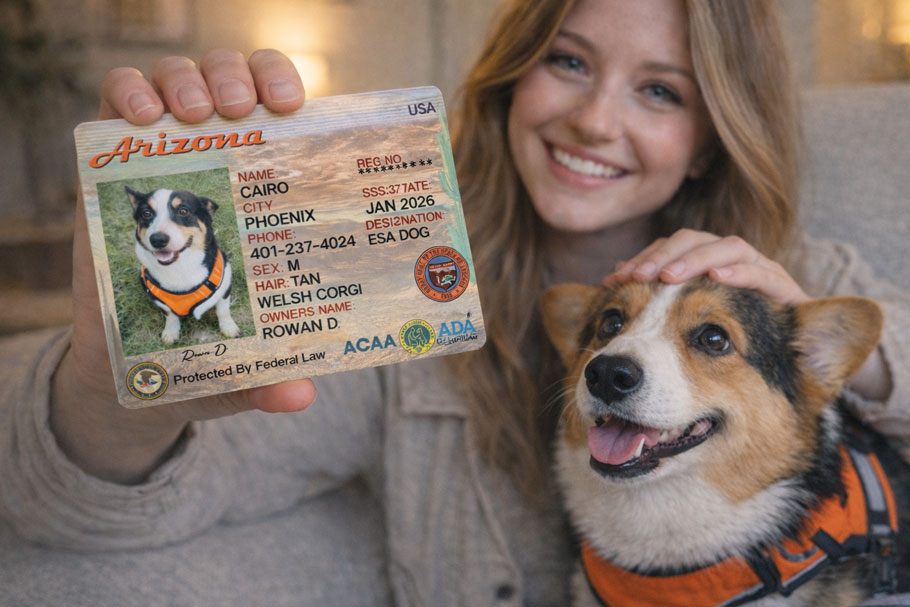
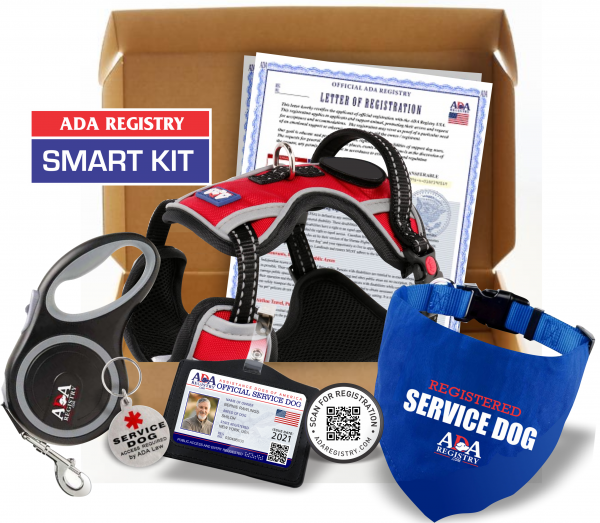
Avoid paid “registries” that promise legal status
If a website offers to “register” your dog as a service animal for a fee (and implies it will make your dog legally a service dog), that is not how ADA service dog status works. The ADA focuses on the dog’s training and behavior in public, not a purchased ID card.
Emotional Support Animal Rules in Kansas
ESAs are primarily a housing concept (not public access)
Emotional support animals (ESAs) generally do not have the same public-access rights as service dogs under the ADA. Instead, ESAs are most commonly addressed in housing rules. HUD explains that an assistance animal can include an animal that provides emotional support that alleviates one or more identified effects of a person’s disability, and that a person may request a reasonable accommodation to a housing provider’s pet restrictions.
An ESA is not the same thing as a dog license
An ESA letter or accommodation request is about where you can live with the animal under applicable housing rules. A dog license in Kansas is a local compliance step that typically involves rabies vaccination proof and payment of a city/county fee. They serve different purposes and one does not replace the other.
Local licensing can still apply to ESAs
Even if your dog is an ESA, local ordinances can still require that the dog be vaccinated for rabies and licensed (just like other dogs). So if you’re asking where to register a dog in Kansas for an emotional support animal, start with your local city/county licensing office—the same place a pet owner would go.
What paperwork is typically relevant for housing
Housing providers may evaluate accommodation requests and may request information needed to verify a disability-related need when that need is not obvious. The key point is that this is a housing accommodation process—not a statewide ESA “license.”
Frequently Asked Questions
You generally do not need to register your dog as a service animal in a special registry to be a service dog. ADA guidance explains service animals are not required to be certified, professionally trained, or registered, and that public-facing entities cannot require documentation that the dog is registered or certified as a service animal. However, your city or county can still require a standard local dog license and rabies vaccination, because those rules can apply to all dogs.
Start by identifying whether your new address is within city limits. If it is, the city animal services, city clerk, or police department animal control unit often handles licensing. If you live in an unincorporated area, the county animal control or county health/animal services contact may direct you. This local approach is why “where to register a dog in Kansas” can have different answers depending on your ZIP code.
If you’re unsure, call the nearest official office listed above (or your city hall) and ask which department handles animal control dog license Kansas questions for your address.
Often, yes. Many Kansas local governments require proof of current rabies vaccination at the time of licensing. For example, Topeka’s pet licensing instructions state that proof of current rabies vaccination is required, and Sedgwick County describes rabies vaccination requirements (annual or 3-year) and licensing requirements. Always confirm your city/county’s specific rule.
No. ESAs generally do not have the same public-access rights as service dogs under the ADA. HUD describes assistance animals (which can include emotional support) in the context of housing accommodations. If your goal is public access in stores, restaurants, or other public places, ADA service animal rules apply—and those rules focus on task-trained service dogs.
Yes. ADA guidance states that state/local governments can require service dogs to be licensed and vaccinated if all dogs are required to be licensed and vaccinated. What they generally cannot do is require mandatory registration/certification specifically as a “service animal” as a condition for public access.
Disclaimer
Licensing requirements and office locations may change. Residents should verify details with their local animal services office within Kansas.